


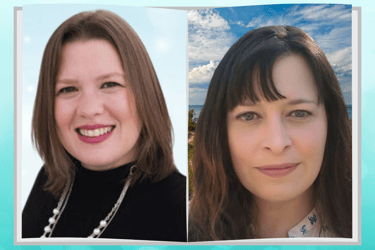
In our weekly feature, we will take you behind the scenes with some of the talented authors who have been interviewed on Beyond the Pages by Deb McIlroy & Erin Shea on our YouTube channel. Get a glimpse into their creative process, inspiration, and the stories behind their stories. Stay tuned for exclusive insights and anecdotes from the minds behind some of your favorite books.
What was your motivation for writing your latest book? Can you elaborate on the process behind it?
I’ll talk about the Curse of Ophelia series as a whole, since my upcoming release is the final book in the series. When I started writing this series, the characters were already very real to me. They are always my driving force. But I also set out to write it knowing I wanted to make people feel. Be it anger, swooning, or just feeling seen, I wanted big emotions that readers would resonate with. I think my writing style—often a bit lyrical and sometimes “flowery” as some would say—lends itself to that. I love manipulating words and metaphors so they reach out to readers and really drag up emotions. I had a lot of feelings to get out on the page, and I think it’s really cool to see how we all relate in that sense, even if we identify with a character or plotline for different reasons.
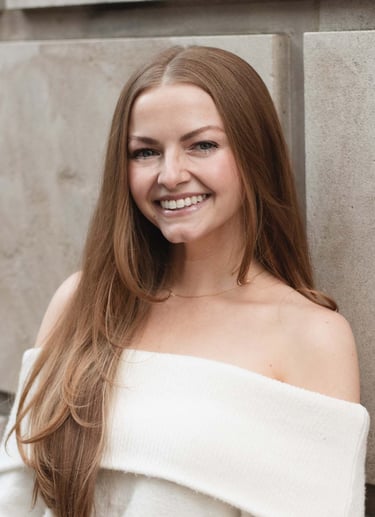
This week, we have the pleasure of chatting with Nicole Platania, the talented author of the Curse of Ophelia series
Could you describe your writing routine and how you maintain focus and creativity throughout the process?
I’m lucky in the sense that I’ve always been very disciplined when it comes to work. That combined with how much I truly love writing these books really helps. But there are definitely days when I’m not feeling the creative spark. I need to be better about giving myself grace on those days. But I do find that if I write every day—even if it’s just 100 words on some days—the habit is easier to keep. I’m a total wild card in terms of my writing space. Some days I need a mindless TV show on in the background, some days I need music strictly through headphones, and sometimes I need total silence. I try to listen to my brain and just follow whatever it needs in order to be creative that day.
Which themes resonate strongly in your writing, and what draws you to these particular themes?
I think a lot about what I expect to see in my books across series as I venture into new stories. One thing we’ll definitely continue to see is strong women, but perhaps strong in different ways than Ophelia is. I think it’s really great to see varied examples of that reflected throughout the media. I will always continue to lean into the themes of hope through the darkest times and fighting for what you believe in. And though I wouldn’t really consider it a theme, I will also pay attention to mental health and healing stories. I think those are so important to bring into focus, especially through books, since so many of us turn to them when we are feeling alone or in need of escape. I want readers to always feel like they are seen in my books, but also like there is a light in the darkness.
What message or impression do you hope to convey to your readers through your work?
I hope readers feel at home in my books. I wanted them to know that they always have a place in these worlds. I also hope they know that they can fight as fiercely as Ophelia or be as loyal as Tolek. That they are resilient like Mila or as clever as Santorina. All of those qualities are within them, and they can reach whatever dreams they want to.
What is your approach to crafting character arcs, and how do you ensure that they are relatable to readers?
Flaws. “Perfect” characters don’t exist, just like perfect people don’t exist, and in my opinion, trying to make your characters perfect makes them weaker. You need to give them real human flaws. It is okay for your readers to be mad at characters or disagree with them at times. That’s where the writing comes in to at least help readers understand why characters are behaving in certain ways. But without those flaws, the characters have no room to learn and grow. I try to identify these emotional bruises before I even start writing—though sometimes they like to reveal them later on—so I really know who they are at their heart.
What has been the most surprising or rewarding part of your writing journey so far?
Gosh, there are so many rewarding parts of this job, but there’s a special kind of excitement in the air when readers get a new book. When I’ve been working on it for a year or more, and I finally get to hand it over, it is so rewarding to see the emotions readers feel as they read it. It can be so easy to forget the reason we do this job sometimes, since so much of it is spent in isolation, but once you finally share it and receive messages from readers who were impacted by your work, it’s so special. That happened a lot when I published The Shards of Ophelia, and it was extremely humbling.
Buy the book Here
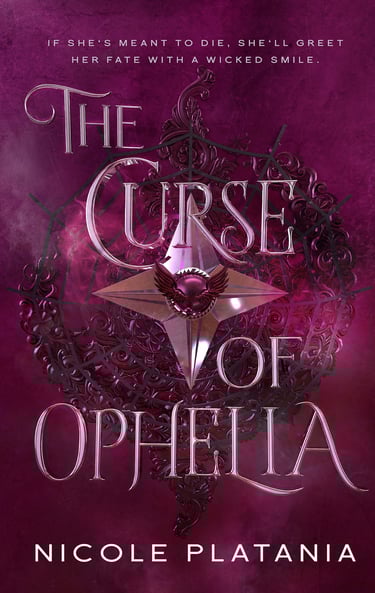
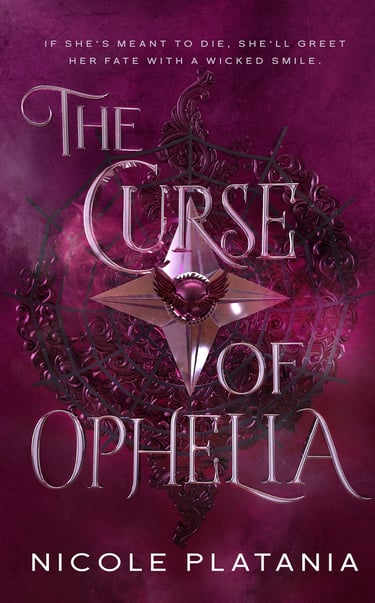
The Curse of Ophelia
The war is over. The curse is lifted. Malakai is gone.
It's been two years since Ophelia has seen the boy she loves. When a treaty was signed ending the war and lifting the curse on Mystique Warriors, Malakai left to attempt the sacred ritual known as the Undertaking.
He never returned, and the Undertaking was forbidden. Ophelia's world crumbled around her.
Since then, she has pursued a fruitless search for answers. When the deadly curse resurfaces only on her, Ophelia finds solace in the idea that when she dies, she may finally be reunited with her lost love. Then, a messenger appears, telling her that she alone may be the one to save her people.
With her closest friends by her side, Ophelia embarks on a race against death—one that will not only challenge her physically, but make her question the Mystique leaders, the Angels, and her belief in love.
Can she win the fight against fate before the curse takes her life, or will the betrayals exposed along the way kill her first?
How do you tackle the challenge of pacing in your narratives? What techniques do you use to keep readers engaged?
Pacing is often my biggest challenge and the thing I wrestle most with in revisions. What I have tried to do is look at each chapter as its own individual story. Where are we starting and where is it taking us? Those two questions should have clear answers for every chapter. Sometimes I frame it to myself as “what is this chapter setting up and how is it launching us into the next one?” Also, I ask my editor for a ton of help! That’s why we love our editors.
In what ways do you incorporate feedback from your peers or readers into your writing?
I have a team of alpha and beta readers whom I rely on a lot. They are geniuses and have helped my books become so much stronger. Of course, a lot of feedback is subjective, so you, as the author, get to decide what to include and what not to, but I especially pay attention to their questions if more than one person has made the same comment. However, when it comes to reviews, I don’t read those. Those are for other readers, not a way for me to receive criticism.
How do you make your settings come alive in your stories? Are there particular methods you use?
My books play like a movie in my head, so I try to include as many of the details as possible. I also try to engage as many senses as I can, so highlighting sounds and smells as well as what the character sees, for example.
What are the common misconceptions people have about being a writer that you would like to address?
The 'I write all the time'. Truthfully, as an indie author, I maybe get to spend a couple of hours a day writing. So much goes into running a business behind the scenes—and as an indie, you are the business—and unless I’m on a tight deadline, a lot of my time is spent on other business and admin tasks.
Could you share an experience where you faced significant criticism, and how did it affect your work?
Some of the toughest criticism I ever received was in grad school. It was given by a professor who did not read in my genre and, truthfully, didn’t understand it. I took that feedback pretty harshly—I definitely cried—but then, I picked myself up and kept going. You aren’t going to be able to please everyone when it comes to art. As much as that sucks, it’s just a fact. That’s why you have to write the books YOU love before anything else.
What role does a supportive writing community play in your life as an author? How has it influenced you?
It is instrumental to me. This is a really weird career. I’m not quite sure what compares to it. it is so important to have people you can lean on, ask questions, commiserate, and celebrate wins with. There’s the practical side of needing to discuss business tactics, strategies, etc., but I think my author friends make me a better writer, too. Not only through their work but just by discussing with their beautiful imaginations.
What advice would you give aspiring authors when it comes to getting published? Any tips on navigating the publishing landscape?
The publishing landscape is an ever-changing beast. Especially nowadays. Look out for people who do not have your best interests at heart, because unfortunately, they are out there. But don’t be afraid to dive in. Reach out to authors, ask questions, and engage in the community. That is all very important.
Honestly, though, my biggest advice is to remember that this career is a marathon, not a sprint. It’s hard work and can take years to see the payoff, but if you truly love it, it’s so worth it. Write the books that speak to your soul, and they will find their readers.